Bardha Markagjoni
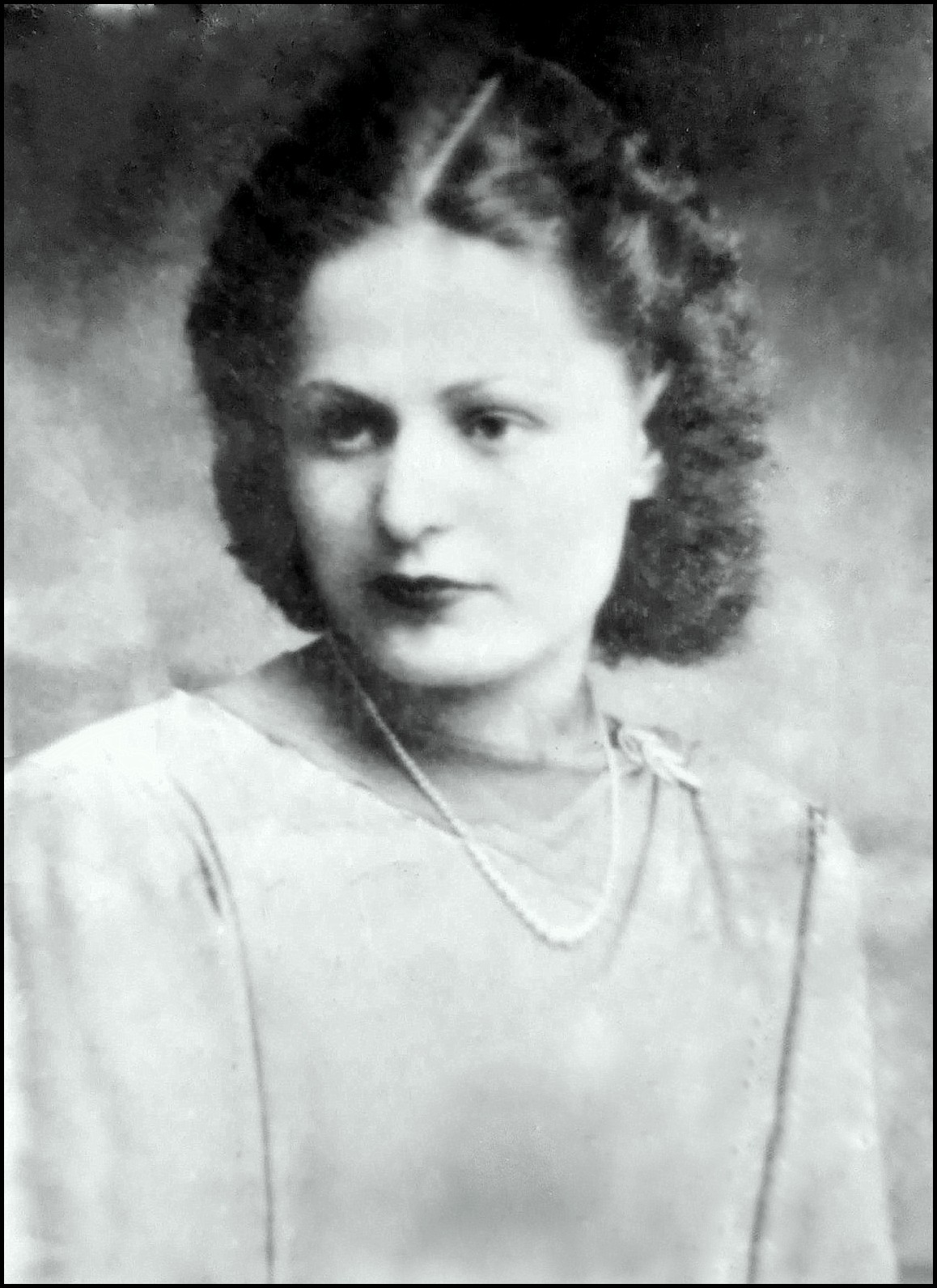
Bardha Markagjoni was born on March 11, 1925, in Orosh, Mirdita. She is the youngest daughter of Kapidan Gjon Marka Gjoni.
Bardha attended the Cabrini College in Rome, Italy, during the height of World War II. She was given the option of remaining in Italy or returning to Albania as the borders began to close. In 1942, she made the decision to return home. Once in Albania, she would never return to Italy to finish her education. The arrival of communism in 1944 would forever alter her life.
With the advent of communism she joined thousands of other families in the internment city of Berat in July 1945. Despite a relatively easy first year, the subsequent years’ work became increasingly demanding. After the summer ended, they had to clean out ditches, harvest crops, plant seeds, and do other farm work. A great number of lives were lost due to the harsh conditions of these jobs.
In March of 1947 Bardha was transferred to the prison in Berat for five months. While most of the time under capture, she was made to stand on her feet with her legs tied so as not to mingle with other prisoners. She was placed in a dark dungeon and then transferred to a smaller cell.
In August 1947 she was released and briefly returned to the family in Berat. It was the day her grandmother Dava died. Not long after they sent her back to the camp in Kuçovё.
In April 1949 she returned to Berat and joined the other family members.
In May 1949, the family was relocated to the Turan concentration camp in the city of Tepelenë. The most horrific barbed wire camp during the regime. Up to 200 individuals of both sexes shared the space with her. She recalled how the north wind reached her core and no blankets were provided for protection.
In late 1954 after the camp in Tepelenë was closed, the family relocated to the Lushnjё district, that extended from the hills of Kolonjё to Rogozhinё, in the Camp Sector “29 November,” which included: Saver, Plough, Gjazё, Rrape, Cerme, Gradishte, Grabian, Dushk, Sulzotai, among others. They were housed in Saver. In this camp, they were required to take part in agricultural labor.
In 1965, at the age of forty, Bardha married Gjergj Bici, a man who had served twenty years as a political prisoner in Spaç. They were relocated to the restricted village of Milot, in the county of Lezhё. They were only permitted to travel to the districts of Lushnjё, Fier, and Krujё while living there. They were under constant surveillance by the Sigurimi and informants who were providing regular information on their whereabouts and actions.
in 1975. Bardha and Gjergj were accused of “agitation and propaganda” based on the fabricated statements of three neighbors: Aisha Hysi Kameniku, Ollga Vasil Kuqi, and Hajrie Aslam Daci (Mena).
In May 1975, they were arrested and detained in jail for interrogation. They were incarcerated in adjacent cells but were not permitted to communicate. During the interrogations, they were fed lies supposedly told by each other and tortured in a way that allowed them to hear each other’s screams of agony.
In Januay 1976, both Bardha and Gjergj were sentenced to ten years in prison each. She was sent to the women’s prison in Kosovo-Belsh, in Elbasan. At the age of 50, Bardha was subjected to the cruellest tortures once more.
Bardha was granted a reduced sentence and released from prison in 1982, but she was sent to the labor camp in Fishtё-Zadrimё, in the district of Lezhё.
“My husband Gjergj returned in 1986 after ten years in prison. He died that same year from lung cancer. Once again, I was left to continue internment life on my own. Other surviving relatives were never within close proximity. They were detained in a separate district,” she recounted.
After the period of persecution, which lasted from November 1944 to August 1991—forty-seven years—the surviving members of the Gjon Marka Gjoni family in Albania were reunited at their home in Shkodra.
As a young woman who was imprisoned, interned, and subjected to lifelong persecution, Bardha Markagjoni exemplified pain and suffering. Her life is a living monument to courage, integrity, resistance, survival, and pride, and she has continued to serve as an example of perseverance.
“They no longer require our services, but the people will never forget the calvary endured by Albania’s political persecuted during the communist dictatorship,” she said with dignity.
Gjergj and Bardha never had any children. She passed away peacefully at home in Shkodra on March 19, 2013.

She leaves behind an extended family of nieces and nephews and will sorely be missed. A great article was written about her in the Albanian paper Truibune Shqiptare
Another great article In Memoriam was written by noted writer and historian Eugjen Merlika, grandson of Mustafa Kruja, Albania’s Prime Minister 1941-1943. You can click on the following link to read the article in it’s original Albanian version Princesa Mirdita. Below is the English translation.
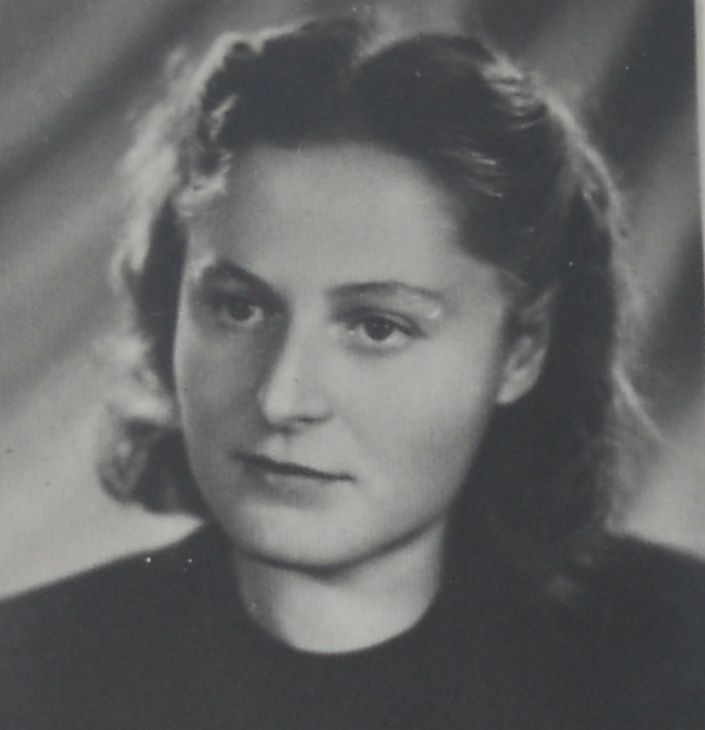
Princess of Mirdita (In Memoriam)
There is news which is often hesitant to trust to man. This happens more when the subject is the loss of a loved one, whom you visited recently, for just a few hours, and left without thinking as though it might be your last meeting. One can think about the fragility of human life to calm the soul wounded by an unacceptably hard loss, but something remains to prick the soul about the conversation which suddenly becomes the last in the life of a man.
Going so far as taking up the pen to compose one last honor through these simple words that come from the depths of the heart, a friend, close to my mother, a daughter and a family friend of my father’s in the early years, a noble woman, known as a child in the death camp, a proud “pasardhëseje” of a house known to Albania of beautiful traditions, a princess of Mirdita, Bardha Gjomarkaj, who was remembered on March 20 at her home by a large majority of relatives, “bashkëvuajtësish” and citizens of Shkodra.
She was separated from the bosom of the family on March 19, but I was separated from her at the outer gate of her home on March 9, after visiting Shkoder, Albania for a few days. It was the wish for a quick kiss, a hug, as when I was a child, with the warmth of a mother. Because she remembered my mother she often spoke to me about it. They spent terrible years in Tepelene. Every day together in line like cruel slaves, loading wood on their back to bring to camp or to take to the families of the officers. Each day under the weight of the wood of the dictatorship, for years at their most beautiful age in life, in its first quarter century, the age of women’s dreams for love, for family.
For Bardha and her friends dreams were deeply hidden in a secret drawer, and life required of them to face the ordeal of labor. It also required another thing, to retain human dignity at the highest levels. This was the most difficult mission that was undertaken by Bardha, her sister Marta, and suffering friends; Elena, Gina, Suzana, Cuba, Kuni, Ruqaiyya and many other girls and women of noble Albanian families in the internment camps of the dictatorship. Most of them now lie in the world of truth, their spirit calm. Their resistance to violence and its provocations maintained the dignity and honor of their families, who were prominent Albanian families in the patriarchal society. Those women deserve the laurels of glory, not only for their parents and their children, but for all Albanians, because they represented the Albanian woman in her heroic tradition, more noble, more beautiful, more inspiring for generations and history.
Bardha was the younger daughter of Kapidan Gjon of Mirdita. All her life was a continuous persecution, from a young age until the last breath of the regime. Faced with civil courage and bravery after being separated from her father and Ndue, the older brother who left the homeland, and the loss of freedom for her martyr brothers, Mark and Sander, bright men who fell in battle against communism. Internal family disasters like the illness during internment of her sister in law, Marta, compelling her to take over the upbringing and education of her young nieces and little nephew, hard work in the yards and fields of Albania, and later marriage in prison and ultimately the loss of her husband. A noble woman, never broken. A smart woman who engaged in discussion with many persons. A sweet woman faced with stoicism in the absence of children.
The changes during the years after communism would bring family, and with it its pleasures, to the Mirdita princess. She returned to her home in Shkodra and found it almost completely destroyed, but it gave her the opportunity to inhabit her ancestral home. At that home her nephew Gjon was married, and with it brought new hope to this family, which was diminished by death and exile. Gjon, managed to become Mirdita’s deputy in the Albanian Parliament in 1996, and the reason of true joy for his uncle Dedë and aunts Marta and Bardha.
But cruel fate once again played its hand and the nephew that she so loved, the light of hope after half a century of darkness which continued to shine on their tired faces, Gjon, departed from his people prematurely and this was a serious coup suffered by the family, especially Bardha. She failed to swallow the bitterness of the last years full of pain, tired of honor, and always dreaming of a child in the house.
Princess Bardha’s white spirit has already reached paradise. I believe that hell and purgatory were spent during her 88 years of life on Albanian soil. We are left with memories of her many difficult moments, left to cope with the wisdom and sweetness of a princess, but also the strength and determination of a “malësoreje.” Farewell beloved daughter, worthy and noble Albanian, whether you dust easily!
Eugjen Merlika, March 2013
 Familja e Kapidan Gjon Marka Gjonit
Leave a comment
Comments 0